

“John Locke, in the book he wrote On Civil Government, laid the foundations of constitutional, or representative government as to its substance. For he taught that legislative power belongs not to the ruler but to the people: which doctrine supposes popular sovereignty […] These principles however are altogether absurd and antisocial, as we have demonstrated elsewhere.”
“Whence the best ordering of rulers is in some city or kingdom, in which one (the Monarch) is set over all according to virtue, who presides over all, and under him are some ruling according to virtue: and yet such a rulership (Monarchy, namely, tempered in this manner) pertains to all, both because all are able to be elected from all (who are appointed to rule according to virtue under the monarch), and also because all elect them.”
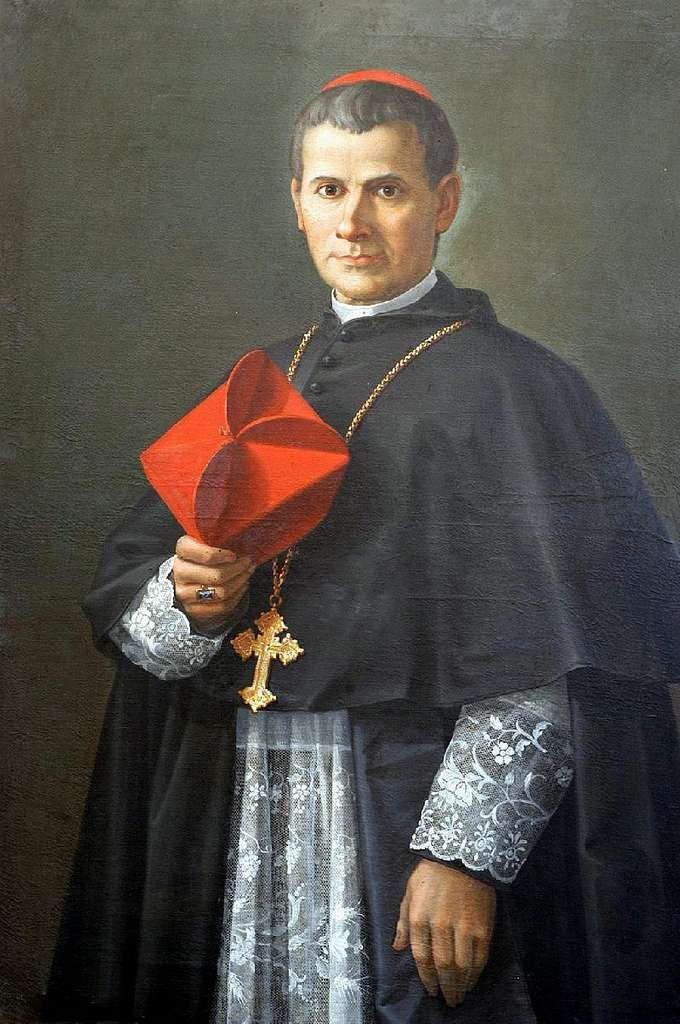
An Unyielding Thomist: Cardinal Zigliara’s War on Modern Errors
The careful reader of The Journal of American Reform, doubtless, will have noticed our affinity for the doctrine of Cardinal Tommaso Zigliara, O.P. We have already translated and published two essays from him, drawing on the third volume of his magnum opus “Summa philosophica in usum scholarum.” Ever-faithful to St. Thomas, this multi-volume work of philosophy enjoyed international circulation and high acclaim in the early twentieth century as a textbook in many seminaries.1 Specifically, our two previous essays concerned modern errors, namely the freedom of worship and the liberty of conscience2 which the Italian cardinal refuted, respectively:
The Doctrine of ‘Freedom of Worship’, its Principles and Effects — Zigliara, 1910
The Doctrine of ‘Liberty of Conscience’, its Principles and Effects — Zigliara, 1910
This essay — which, to our knowledge, constitutes the first published English translation — sets out to expound positive doctrine while offering a further critique of modern errors; but more on that in due course.
Building out Cardinal Zigliara’s biography, he was a close friend of Pope Leo XIII,3 including while he was still Cardinal Pecci. While the legend of Leo XIII being a liberal Pope still has purchase in some circles, the same can not be said of Cardinal Zigliara, whose anti-liberal bonafides (naturally, also shared by the former) were notorious. In 1878 he was appointed consultor to the Sacred Congregation for Ecclesiastical Affairs4 and was elevated to the Cardinalate in 1879, in the very first conclave by Pope Pecci.5 When it comes to contributions to papal encyclicals, Cardinal Zigliara is most known for his involvement in the drafting of Aeterni Patris “On the Restoration of Christian Philosophy” in 1879 and two years later, Rerum Novarum “On Capital and Labor.” Lesser known, however, was his hand in the 1888 encyclical on “Human Liberty”, Libertas,6 which to us, now, seems rather fitting.
Towards the end of his life, Cardinal Zigliara could look back with contentment at having faithfully served the Catholic Church for decades. Though, we suspect he would have maintained that more could be done. Besides receiving the distinction of the Cardinals hat, he belonged to seven Roman congregations, was a prefect of the Congregation of Studies and, not to be overlooked, made co-president of the Academy of St. Thomas Aquinas.7
The good Cardinal died on May 10, 1893 in the Holy City in the presence of his brothers who intoned the Salve Regina, according to the custom of the Dominican order.
The Sublime Principles of Aristotle and St. Thomas
Following our recent analysis, provocatively entitled yet carefully argued, “The Godless Constitution: America’s Original Sin,” the following treatment from Cardinal Zigliara is no less challenging to the American philosophical system, cherished by American Conservatives (moderate Liberals)8 and American Progressives (radical Liberals), alike.
We will offer a brief summary of the text, followed by Cardinal Zigliara’s critique. First, the learned Cardinal explains Aristotle’s three principal forms of government, which are distinguished by their essentially monarchical or polyarchical character, according to whether political authority is vested in one man or several. Cardinal Zigliara then contends that the degenerated forms — democracy, oligarchy, and tyranny — are not true forms of government but perversions of public power, leading civil society to ruin. However, he observes that in practice the moral character of the ruler is of greater importance than the form of government, itself. Consequently, a wicked ruler is capable of corrupting even the best institutions and the wisest laws, along with the opposite being true: a ruler governing wisely and effectively in spite of a flawed governmental system.
Passing over the aforementioned critique, which will be handled in the next section, Cardinal Zigliara then poses the question: what is the best regime? Naturally, keeping with the thought of St. Thomas, he answers that, considered relatively, it is whatever corresponds best to the virtue of a particular people, in a given set of circumstances. That said, considered absolutely, monarchy is the best form of government owing to its effective procurement of social unity, which is confirmed a posteriori by its durability through the ages, unlike the other forms. Descending from the theoretical to the practical, and considering the circumstances of modern man, the mixed regime proves most suitable — that is, a tempered monarchy. Simple or absolute monarchy, though superior in principle, is especially vulnerable to corruption, whereby a King becomes a tyrant. For this reason, the tempered monarchy is the prudent arrangement, restraining royal power and guarding against tyranny.
It is worth underscoring that in a tempered monarchy, unlike mistaken conceptions which are advanced today, political power is not divided — the King truly reigns and not merely governs, legislating as the supreme authority. Yet because the regime is tempered, law and custom join to moderate royal power. This moderation is effected principally through an aristocracy: a ruling class of virtuous and prudent men, wholly subject to the King, rendering counsel and likely influencing weighty laws, but holding no share in legislative authority.9 The final moderating element, the democracy or people, serve as the pool from which rulers can be found, elected by the same according to virtue under the King. In this arrangement, royal authority is to be maintained as the primary element, followed by aristocracy and finally democracy, all harmoniously ordered towards the good of the whole kingdom, directed by the former.
The Uncomfortable Convergence in our “American Experiment”
After this standard recapitulation of classical political philosophy, outlined by Aristotle and St. Thomas, Cardinal Zigliara then begins to explain, after which he dissects, the aberration that is known as “Representative” or “Constitutional” government. We only ask that our readers begin a mental comparison, looking for similarities to our own governmental system. This “Representative” form of government, if the term is being applied loosely, was originally outlined by John Locke in his treatise on Civil Government, then adopted to a greater or lesser extent by Rousseau and popularized by Montesquieu, and has now — sadly — become all but universal.
In this system, a King can govern but can never rule, a President may preside but only that, since congress, principally, has the power to legislate; whose laws can be interpreted independently by the judiciary, sometimes even against the (moral) mind of the congress. In this governmental system, each organ is independent and divided, deliberately pitted — one against the other — so as to be engineered for disunity, ensuring that unity is only achieved by accident.
Contrary to common sense and sound philosophy, this system inverts the truth that “division of powers is therefore in itself a social evil, and does not become a good unless it is necessary to prevent greater evils” since, as Fr. Luigi Taparelli explained, “that everything that is in accordance with the need for contrast is taken away from the unity which is the most essential constituent, indeed is the very being of society.” Further, in this governmental theory and framework, no account is made for the reality that man does not, necessarily, exercise his power for ill, rather the contrary is often true; or for the possibility for grace and conscience to act on a ruler so as to keep him from abusing his power. These ideas are characteristic of political naturalism, ably refuted by Pope Leo XIII in his 1884 encyclical against Freemasonry and its principles, Humanum Genus.
As we learned from Fr. Matteo Liberatore’s “Against Liberal Conceptions of Society and the State — Liberatore, 1877”, this “Representative” or “Constitutional” government goes by another name: it is none other than Liberal government:
And this flaw grows even greater if one fully accepts the liberal system in which it is established as a principle that the prince has no business concerning himself with moral order and that only one thing falls to him: the concern for material order. According to this system, the one who governs must no longer remember that he is a man and that he has a society of men to lead, since it is impossible to separate in man the material order from his relationship to the moral order, just as it is impossible to separate in him, as long as he remains a man, the body from the soul.
[…]
But how is this unity possible when the very system tends toward the division of thoughts and affections, through the freedom it grants to profess and inculcate any doctrine, to follow and endorse any tendency? And experience demonstrates this with undeniable fact; in full view of everyone, in states that enjoy a liberal constitution, disagreements, dissensions, parties, and hatreds divide the same nation, the same people, so thoroughly that one can truly say of them that:
And those enclosed within a single wall and moat are gnawing on each other.
It suffices to look at a Parliament where the cream of liberalism resides to see the concord that this theory is capable of producing. And while in Parliaments the manifestation of this disagreement hardly goes beyond verbal violence, in the masses raised according to liberal principles it escalates to far more deplorable acts that sometimes have to be repressed with bloodshed. Is this peace, the principal end of the institution of civil society?
The division of minds, it will be said, is also found in governments that are not liberal. This is true, but at least it does not erupt outwardly to spread its contagion to others, and in any case, it does not arise by virtue of the governmental system itself, but only as a result of human frailty. In liberal governments, nothing prevents it from spreading, and it arises from the system itself, which is, as we have seen, the inevitable consequence of the separation from the Church.
With this in mind, we must ask ourselves as Americans: how sound, exactly, is our constitutional system and its underlying principles? Did we truly conceive the greatest government known to man — a shining city on a hill, providentially appointed to spread the reign of liberty, human dignity and the rights of man across the world? From Winthrop to Madison and Jefferson, through Lincoln, Wilson and Kennedy, then Reagan, one shudders at the answer.
Now, without further ado, The Journal of American Reform is pleased to present Cardinal Zigliara’s treatment of the principal forms of government, the absurdity of representative government and a defense of the best regime.

On the Diverse Forms of Government.
I. The generic division of political government. The diversity of political government is derived not from public authority, which is one and always the same, but from the subjects by whom political power itself is exercised. Hence the generic division of the form of government into monarchy and polyarchy. The former, as the word itself signifies, has one physical person; the latter truly requires several physical persons as the subject of authority.
II. The diverse forms of polyarchical government. The form of polyarchical government can conveniently be divided, with St. Thomas, I, De Regimine Principum, Chap. I, into democracy and aristocracy. Democratic government is called by the Angelic Doctor, ibid., potentatus populi, when namely the populace of the plebeians by the power of the multitude oppresses the wealthy. From which you see democracy being used in a pejorative sense: nor does that word in the mouth of recent radicalism sound anything other than the power of the multitude against the common social good. Nevertheless Democracy in a good sense is also taken by the same Doctor, I-II, Q. CV, Art. I, and is potestas populi, not of those enacting laws, as the moderns teach, but inasmuch as from the common people rulers can be elected, and to the people belongs the election of rulers. — If truly the republic is administered by a few, yet virtuous ones, such a government is called aristocracy, that is the dominion of the best or of the excellent, who are therefore called aristocrats. The abuse of this government is called oligarchy, or the domination of the wealthy, and it is, when a few on account of their wealth oppress the common people, differing from a tyrant only in number.
III. The forms of monarchical government. Monarchical government is divided twofold with respect to its origin; and threefold with respect to its form or its exercise. — With respect to origin it is hereditary or elective. The former is when, upon the death of the king or emperor, he succeeds to the kingdom who is predetermined by the very laws of that kingdom or by legitimate custom, whether he be a son or anyone else. — Elective monarchy truly obtains when, upon the death or cessation of a monarch, election designates a new king according to the laws of eligibility. With respect to form or exercise, monarchy is divided into absolute, tempered, and representative or constitutional. — Absolute is when the supreme power of the whole government resides in one, whether he be called king, or emperor, or by any other name whatsoever; in such a way namely that he enjoys plenary power of himself to enact laws for the good of the multitude, without dependence upon pre-existing civil laws or the consent of subordinate rulers. — Tempered is when the Monarch is bound by certain fundamental laws of the kingdom, by which his power is constrained, and moreover acts only with the subordinate rulers joined to him, e.g., the Governors of provinces or municipalities, or their delegates, and having sought and obtained their consent, can bring forward laws: in such a way namely, says St. Thomas ibid., that one is set over all according to virtue, who presides over all, and under him are some ruling according to virtue. — Finally constitutional monarchy is the division of civil power, that is a government appearing to be that of one, but in reality the dominion of many. For the King reigns but does not govern. The people governs, to whom legislative power is attributed not to be exercised by themselves but through deputies elected by them, who together form the legislative body (congress). The King signs and commits popular laws to execution. But this is enough for now concerning constitutional government; more will be said in the following article.
IV. What is to be thought generically of the diverse forms of government. Speaking relatively, any one of the indicated forms of government can correspond to the end of society, or the common good of citizens. For social government depends more in practice upon the wisdom and probity of persons than upon the form itself: since where the Rulers are wise and honest, they are able to temper whatever is perhaps harsh in the form itself or is contained in its abnormalities: but nothing is to be hoped for, even if the wisest laws prevail, where foolish and dishonest men gain control of public authority, whether they themselves be many, few, or one. For which reason, where any society shall have experienced a particular form of government both from its own history and from custom, and also from its own character more conformable to itself, let it hold to it. Whence it is altogether unlawful for subjects by either covert or open acts of rebellion to attempt to alter or overthrow a form of government established in any State. But if some change with respect to the form of government must needs be made: the right to do so belongs neither to the Rulers alone, nor to the people alone, but to society itself, that is to the Ruler together with the subjects and to the subjects together with the Ruler. — Thus much concerning the forms of government: for democracy taken in the worse sense, oligarchy, and tyranny are not forms of government, but perversions of public power, which lead human society to its ruin.
On the Representative Form of Government.
I. The notion of representative government. Popular government democracy we have called; and we have called the government of one, whether of a king or an emperor or one called by another name, monarchy. The synthesis of both, namely democratic-monarchy, or monarchical-democracy, is that new form of government which goes by the name of representative or constitutional.
II. The principles and elements of representative government. Representative government is founded on the principle that the subject of public power is the multitude, or the people, who hold the aforesaid power inalienably. Nevertheless at the same time a King is admitted in this form of government, but by the will of the people the King is set to reign and not to govern; hence that saying: Rex regnat sed non gubernat. Between the people however and the king there intervenes a compact which is called the Constitution, or the fundamental body of laws, which can be changed only by the popular sovereignty together with the king. The people governs moreover, as was said in the preceding Article n. III, inasmuch as in public assemblies it elects men to whom it delegates its own proper legislative power, so that they may enact laws in the name and by the authority of the people committed to them. These constitute the Chamber of deputies (representatives), or the legislative body. On the other part the King elects other assemblies, themselves also legislative, which are called the Senate, and which temper the popular power of the Deputies. Nevertheless in the form of government of which we speak, the Senate is not necessarily required. Hence, the King, the Constitution, and the two Chambers; this is the mechanism, as they call it, of Constitutional Government. — Laws therefore are made by the legislative assemblies, signed by the King, committed to execution by the Ministers. These are elected by the King, and must answer for the lawful execution of the laws to the Deputies, by whom they can be rejected, to whom they deny, as they say, confidence; in which case according to some, the King is bound to select ministers from among the proponents of the prevailing opinion against the excluded ministers. To the King however is granted the power of dissolving the chamber of deputies, and of convening the people, within a determined time, for new assemblies. — Now in order that the execution of the laws may be procured, the army of regular militia is subject to the Ministers and to the King; but so that equilibrium may be maintained and abuses guarded against, there exists civic militia, which is properly the safeguard of the people. — What has been said moreover concerning the disjunction of legislative and executive power and concerning the equilibrium between them, the same is applied to judicial power. For some judges are judges of law, others are judges of fact: these latter are called jurors. — Finally, so that the people may exercise its majesty over its delegates, whether ministers or deputies, the power is given to them to speak and write against the government; not however against the King who is inviolable: for since he reigns but does not govern, he is himself irresponsible for those things which are carried out by his government or by his ministers. — Thus much concerning the form of this government, but I note that this form of government, even by those who extol it with the highest praises, has not yet been clearly defined.
III. Representative government examined generically. John Locke, in the book he wrote On Civil Government, laid the foundations of constitutional, or representative government as to its substance. For he taught that legislative power belongs not to the ruler but to the people: which doctrine supposes popular sovereignty, and is, as we said in the preceding number, the sine qua non condition of the existence of this form of government. Rousseau transcribed Locke in his Social Contract, writing Bk. II, Chap. I: “Since civil power is nothing other than the exercise of the general will, it cannot be alienated; and the Prince who is nothing but a collective being cannot be represented except by himself.” From which posited principle it follows that Legislative power belongs to the people, and cannot belong except to it, as he himself writes Bk. III, Chap. I. Such are none other than the principles of the writers who both explain and defend the aforesaid form of government. These principles however are altogether absurd and antisocial, as we have demonstrated elsewhere (Art. 51). But even setting aside such absurdities and the other things pertaining to the disjunction of civil powers (53, I; 54, II), upon which nevertheless that whole constitutional machinery rests, I say:
IV. The representative form of government is the most imperfect of all. In any form of government four things are chiefly to be considered: 1° its constitutive elements; 2° the legislative power; 3° the executive power; 4° the judicial power. But these four are most imperfectly had in the representative form of government. Therefore the representative form of government is the most imperfect of all. The minor is proved:
Regarding the constitutive elements. For where several elements concur in forming one composite (as precisely occurs in society), it is necessary that the collision of the parties be avoided as much as possible, so that the parts may coexist simultaneously in a peaceful and harmonious manner. Otherwise from the collision of the parts the whole is either dissolved or exists in a state of violence. But such a collision is intimately in the nature of representative government. For on one side the King reigns, on the other the people governs. Each enjoys its own authority, and indeed supreme; hence frequent collision, hence public anxieties, hence the disturbance of civil peace, and the desolation of the kingdom itself: for Omne enim regnum in se divisum desolabitur, as our Redeemer has taught us. — Add moreover that the King reigns but does not govern, the people governs but does not reign; both reigning and governing are in fact a certain party, which defends not the opinion of the people but its own, and with the people ignorant, circumvented and deceived, uses it as an instrument for satisfying its own ambition. I recount facts manifest from daily experience.
Regarding legislative power. Beyond doubt in enacting laws there are required men endowed in the highest degree with wisdom, probity, prudence, maturity, and knowledge both of men, and of affairs, and of the times. But men who are lawmakers in constitutional government are elected by the people, to whom it is denied, not without contradiction, the wisdom of enacting laws by themselves, and at the same time there is granted the wisdom of discerning and electing more skilled and more fitting lawmakers of the people. Hence lawmakers are elected — physicians, petty lawyers, the ambitious — who have not so much as crossed the threshold of the most difficult social wisdom, whom the people knows not at all, but elects, enlightened, as they say, by tribunes, factions and chatterers, but in truth blinded and deceived. — Those elected indeed, in this irrational manner, as mandated representatives of popular power, convene in one body, and are divided into whatever several factions. Some indeed follow the positions of the ministers as blind instruments, or better as cattle; others truly affect opposition against the ministry, not indeed out of love of the common good, but to capture vainglory from the ignorant multitude, and to seize the occasion of ejecting the ministers, to succeed them in their place or as members of their own faction from whom they have good hope. To which opposition, that the ministers may make opposition in turn, they have recourse to corruption, satisfying the cupidity of some with the public treasury, and the ambition of others with public dignities. Thus egoism fights constantly against egoism, and meanwhile laws are enacted not as wisdom and justice demand, but with foolish precipitation and partisan zeal; so that very often it is not a legislative assembly but truly a tyrannical assembly that is had: and thence the oppression of the people, beyond what can be believed.
Regarding executive power. This, as has been said, is committed to ministers, who on that account are responsible before the deputies. This in theory; but in fact answer to no one but enjoy the irresponsibility of responsibility. In the end they are dismissed from office. But let Audisio be heard, Juris naturae et gentium..... fundamenta, Bk. III, Tit. VIII, §.VII: “The king’s ministers... can be repelled by the assemblies as many times as until grateful ones are elected: and on that account they are held to be servants of the Assemblies rather than of the king. Their condition is most unhappy. Their chief skill consists in obeying the dominant faction lest they perish. But since ambition presses upon ambition, faction upon faction in representative government, where all passions are heaped together, ministers strive with ingenuity lest they be supplanted. First they surround themselves with friends, continually pressing in upon public offices, with the old ones often excellent in experience and fidelity being rejected: if a pension is added to these, public money is poured out in vain; if it is denied, injustice is done. The bones of adversaries too must be thrown to them lest they cause harm. Journalists must be bought, lest they lurk in hiding. Electoral colleges must be corrupted. All these things are to be carried out with the people’s money: whence vehement squandering of public funds receive some explanation. The greater evils however — examples of cunning, venality of everything, dissolution of virtue, and a school of corruption — flowing from the summit of power down upon the subjects. Hence the abjection of souls and of the nation, within and without: for while self-interest impels a free king to protect the liberty of his people, on the contrary a constitutional minister is allured by self-interest to beg from a foreign nation that firmness which he does not have within.” Thus far Audisio. A horrible picture indeed, and yet less horrible than true.
Regarding judicial power. “Citizen jurors, again Audisio ibid. §.X, chosen by lot, are set to render judgment in fact in criminal cases, and easily disturb justice, because an experienced mind, not an ignorant one, judges prudently concerning facts, and also because the account of the fact is often joined with the law. Imagine a case being tried concerning a bishop reluctantly subject to the civil law which carries the suspicion of heresy or schism: the resolution of the fact depends upon the law. But what does an innkeeper, a craftsman, a pickle-seller see here? Would not their judgment be ridiculous, the law ridiculous, the nation ridiculous content with such judgments? This however occurs; and as often as an insane verdict of fact precedes, nothing is left to the magistrates, unless they themselves determine the maximum or minimum of the penalty. The reason of such a law was this: to distort judgments, to render the integrity of magistrates void, to bring violence upon the innocent, to bring impunity upon the guilty, to cut the sinews of justice. What therefore remains in the state? Neither king, nor soldier, nor judge: or rather, the names survive, the offices are hollow of strength, the persons held fast by stupor and paralysis.”
On the Best Form of Government
I. Question. Setting aside that form of monarchical government which is called constitutional — which we have shown in principle to be absurd, and in practice to be either absolutism, or the tyranny of monarchy, or the tyranny of democracy — we now inquire into the best form of government. This question, however, can be treated either in a relative sense or in an absolute sense. Concerning the best form of government in the relative sense, what we touched upon above (56, IV) is sufficient; therefore the only remaining question to be resolved is that of the best form of government in the absolute sense. Let this therefore be the first conclusion.
II. The best form of government is Monarchy. Proof: That form of government is to be held as best which most corresponds to the end of society, and which is shown by history to be more firm and durable. But such is Monarchy. Therefore monarchy is the best form of government. — The major premise is certain: for in those things which men look to, not only theory is to be considered, but also praxis, so that from the conjunction of both a right judgment may be brought forth. Since therefore public authority exists to direct society toward its end: what form is more fitting both from the standpoint of end and from the standpoint of fact is rightly to be concluded. The minor premise is therefore proved.
Monarchy corresponds more to the end of society. The end or common good and the welfare of the associated multitude consists in the preservation of its unity, which is called peace (52, VII); when this is removed, the usefulness of social life perishes, and moreover the dissenting multitude becomes a burden unto itself. Therefore the more efficacious a public Government shall have been in preserving and fostering the unity of social peace, the more will it correspond to the very end of society. Now that unity is obtained more efficaciously and more perfectly by one than by several public rulers: for in one there is held a unity not only moral but physical and per se, which therefore cannot dissent from itself, nor be impeded in its action; whereas in several there is held a unity indeed moral but not physical, not per se but per accidens, and since several can dissent from one another, they do in fact easily dissent, and mutually impede one another in action. Now it is evident that the more a principle is one and free in its activity, the more it is able to effect and preserve unity. Therefore monarchy corresponds more to the end of society. — S. Thomas, De regimine Principum, Bk. I, Chap. II.
Monarchy is shown by history to be more firm and more durable. “For those provinces or cities,” says St. Thomas, “which are not governed by one, labour under dissensions and toss about without peace, so that the word which the Lord spoke through the Prophet (Jer., XII, 10) seems to be fulfilled, saying: Many shepherds have destroyed my vineyard. On the contrary, those provinces and cities which are governed under one king enjoy peace, flourish in justice, and rejoice in an abundance of things. Wherefore the Lord promises His people, as a great gift through the prophets, that He would appoint for them one head, and that one prince would be in their midst.” — And from this the minor premise concerning the shorter duration of republics in respect to monarchy must be recalled. Taparelli in his Saggio teoretico di diritto naturale, n. 554, in nota, Haller reports the following Statistics. — The Athenian Republic lasted 272 years; — the Roman, 465; — the Genoese, 269; — the Helvetian, 442; — the Germanic (inferior), 207. — The Venetian alone lasted 1343 years. — Many others, Taparelli continues, we could enumerate, but excepting Sparta, whose laws are a portentous phenomenon in the history of the social order and which cannot be desired by a people not barbarous, and the Republic of San Marino which found its preservation in its very smallness, the other republics have not enjoyed a longer life than those cited above.
III. Given the present condition of men, a tempered monarchy is better than an absolute one. What absolute monarchy is and what tempered monarchy is, we have already said (56, III). This second conclusion is therefore proved. For given the condition of men, it must be guarded against lest a King, abusing his power, degenerate into a tyrant. This danger is more remote when the royal power is tempered by certain fundamental laws, to which the King himself is subject, lest he determine all things according to his own will. — Then: “Concerning the good ordering of rulers in any city or people,” says St. Thomas, “two things are to be attended to; of which one is that all should have some part in the rule: for by this is the peace of the people preserved, and all love and guard such an arrangement. The other is what is attended to according to the species of government, or of the ordering of rulerships, of which, since there are diverse species as the Philosopher teaches in III Politicorum, the chief however is one government, in which one rules according to virtue (monarchy); and aristocracy, that is the power of the best (this is the mark of nobility of virtue), in which some few rule according to virtue. Whence the best ordering of rulers is in some city or kingdom, in which one (the Monarch) is set over all according to virtue, who presides over all, and under him are some ruling according to virtue: and yet such a rulership (Monarchy, namely, tempered in this manner) pertains to all, both because all are able to be elected from all (who are appointed to rule according to virtue under the monarch), and also because all elect them. For such is the best polity, well mixed from kingdom (monarchy), inasmuch as one presides, and aristocracy, inasmuch as many rule according to virtue, and from democracy, that is the power of the people, inasmuch as from the common people rulers can be elected and to the people belongs the election of rulers (who are appointed to rule according to virtue under the king).” — Thus St. Thomas, P. I-II, Q. CV, Art. I.
IV. Note. An objection is resolved. You will say: This doctrine of St. Thomas seems to differ not even a nail’s breadth from the constitutional government impugned by us above. — I respond by denying the assertion. And in truth: 1° in St. Thomas’s tempered monarchy the political power is not divided: the King truly reigns and not merely governs; and the princes who are subject to him do not enjoy legislative power, even though the king, only once their counsel has been sought and obtained, may bring forward laws in matters of greater moment; whereas in a representative government, the Chamber is properly the legislator, not the King, who merely ratifies the laws and commits them to execution. — 2° The threefold civil power flows from a single principle according to St. Thomas, and resides wholly in the king; — 3° finally, the social principles concerning the origin of society, the subject of authority, and other such matters, without which government loses its proper nature, are principles opposed to those social principles which, with St. Thomas as our master, we have defined in their proper places — that is, those of constitutional government. — But if, notwithstanding all this, someone were to contend that representative government can be reckoned among the forms of tempered monarchy and is therefore not alien to the political principles of St. Thomas; I would respond that the tempered monarchy proposed by the Angelic Doctor draws nothing away from royal dignity, whereas on the contrary in representative government authority is tempered in such a way that royal authorities, by force of principles, retain the royal name but wholly lose the reality.
END.
CONSIDER SUPPORTING THE JOURNAL OF AMERICAN REFORM!
As I intend to devote more and more time to this political project, I want to continue to provide free, educational material, whether visual (edits) or written (essays, translations and a forthcoming book) content. If you have benefited from my work in any way, kindly consider supporting The Journal financially. On a personal note, I am married and duty-bound to provide for my family, so any help, big or small, is appreciated.
Regardless, the production of free material will continue, hopefully with ever-increasing quality, and I will keep all my subscribers notified of my plans.
In addition to Substack, the home of The Journal, my work and commentary can be found on the following platforms:
X (formerly Twitter): @AmericanReform_
Telegram: @AmericanReform
Callan, C. (1912). Tommaso Maria Zigliara. In The Catholic Encyclopedia. New York: Robert Appleton Company.
There is an orthodox (read Catholic) sense of both of these terms, but Cd. Zigliara naturally takes issue with the the modern, heterodox understanding of liberty of conscience and worship.
Callan, Ibid.
Zanardi, Stefania. “Zigliara, Francesco.” Dizionario Biografico degli Italiani, vol. 100, Istituto della Enciclopedia Italiana, 2020.
Ibid.
Ibid.
Callan, Ibid.
In question here is “Conservative” understood as an ideology (i.e. the American system of philosophy which is a more moderate expression of European or continental liberalism) which is distinct from the legitimate disposition of a “conservative” man.
From our reading of the text, it is unclear if Cd. Zigliara — in his interpretation of St. Thomas — intends to absolutely exclude legislative power from this aristocratic element, or if this is to be excluded save for emergency circumstances. Perhaps this is the suggestion in mentioning “weighty laws,” though mere counsel seems more likely. That aside, if the exception is granted, the aristocracy would not enjoy supreme legislative authority, which belongs uniquely to the King, rather it would be an inferior legislative power.